Our third hemp “summer” study committee
Met October 7th
Greetings! Our third hemp “summer” study committee met, even though it is winter now. The meeting was held Oct. 7th at our state capitol. Rep. Lee Qualm, who is the House Majority Leader, is chair of our committee. Rep. Qualm handed out a letter from Governor Greg Abbott of Texas that covered Texas’s stance on hemp. There has been some misunderstanding that Texas no longer prosecutes marijuana cases now that they have legalized production and sale of hemp and hemp byproducts.
Basically, President Trump signed the 2018 Farm Bill on December 20, 2018, which delegates primary authority of states to develop state plans to regulate the production of hemp and hemp byproducts. The difference between hemp and marijuana is the amount of tetrahydrocannabinol, or commonly called THC, contained therein. The federal farm bill sets the amount allowed in hemp is not to exceed 0.3%. My understanding is that recreational marijuana that’s legal in Colorado has 25 to 30% THC. So, 0.3% or less, if smoked, would create a giant headache but not give the high associated with recreational marijuana.
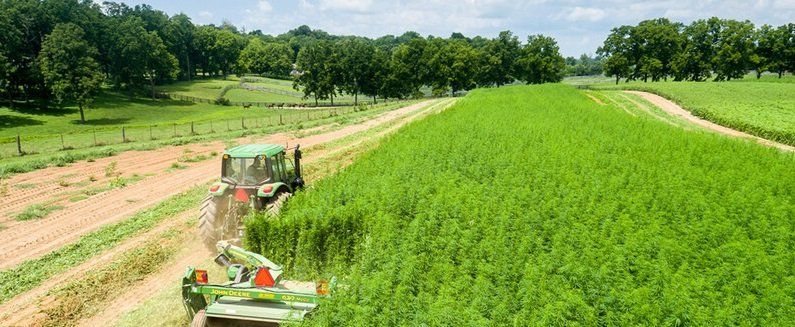
This is a real key point because I agree with Gov. Noem that we don’t want this as a steppingstone to legalizing marijuana. My intent, and I think most legislators agree, is to give our farmers and ranchers an additional source of income with a new cash crop. Just think, if we could have passed hemp this past session, the 3.9 million acres that couldn’t get planted this year, could have been test plots for hemp. Not all the acres would have been planted to hemp, but at least our farmers would have had the opportunity to do so.
Next at our summer study meeting, we had Anthony Cortilet from the Minnesota Dept. of Agriculture testify. His position is Minnesota’s hemp program supervisor. He testified that Minnesota legalized hemp production in 2015.
-2017 Minnesota had 80 growers with 1000 acres planted 8% of crop in the field had to be destroyed because of the THC level being above 0.3%
-2018 they had 300 growers in over 700 fields. He thought less crop would be destroyed due to certified seed that sells with warranty of a less than 0.3% THC level
-He also addressed indoor greenhouse setups where hemp is grown for CBD oil. He also talked about hemp and marijuana smelling and looking alike
-He talked about was male and female hemp plants. You know how you can tell the difference? The female hemp plant is prettier!! LOL. Teasing, but there is a difference.
-Last, he talked about licensing farmers to grow hemp. His office, like other states, test hemp in the field before it is transported to market to test THC levels. If stopped and farmer/truck driver hasn’t a license from the state allowing hemp growth and a certificate from the Dept. of Agriculture, the load is treated like marijuana and subject to seizure and arrest.
Next at the meeting, we had Major Aaron Hummel, Chief of Staff for the N. Dakota Highway Patrol. He basically testified that his troopers work closely with N. Dakota Dept. of Agriculture. Once a few growing pains were dealt with, no real problems have occurred. He also talked about hemp being legal in Canada with the same 0.3% THC criteria.
We then had several commercial companies go over their wares with us. One company had a hemp testing device that looked like a hockey puck and plugged into your smart phone to determine THC levels. It sold for $1500. Also, seed companies were there including one from Willow Lake, SD. Just like seed corn, there are different varieties of seed, except for CBD production. For that, you need to buy it in small plants. I don’t totally understand the CBD oil side of this industry. The other two components are the fiber (stalks), and the grain, comparable to a millet field.
Where are we? Well, we’re waiting for the United States Dept. of Agriculture, (USDA), with new regulation framework that was due in September of 2019. Hopefully, in their new regulations a lot of Gov. Noem’s 315 questions will be answered.
In closing, only 3 states (South Dakota, Mississippi and Idaho) have not legalized hemp at the state level. The 2018 farm bill made growing industrial hemp legal at the federal level. It’s like Larry the Cable Guy would say, “Let’s get ‘er done!”
To the citizens of District 30 and to the men and women in uniform, in honor of all who served, in respectful memory of all who fell, and in great appreciation to those who serve today, Thank You, for giving me the opportunity to represent you.
Tim R. Goodwin, District 30 Representative
Facebook: Goodwin In The House